

Advantages of inductive charging
Inductive charging offers a wireless alternative to conventional charging infrastructure for electric vehicles. It offers a number of additional advantages over conductive charging with plugs. The use of charging cables is completely eliminated, making the charging process much more convenient and user-friendly. In addition, inductive charging stations can be installed at central points in the traffic area – for example, in front of traffic lights or at bus stops – to efficiently use every moment a vehicle is stationary to charge its battery.
With dynamic inductive charging (in-motion charging), electric vehicles are even supplied with electrical energy wirelessly while driving. For this purpose, transmitter coils are installed in the road surface, which generate a high-frequency magnetic field. Receiver coils installed in the vehicle couple this field contactlessly and convert it into electrical energy, which is either used directly for propulsion or to charge the vehicle battery. Energy is transferred as needed and in segments, so that only the sections of the road that the vehicle is travelling on are activated. This reduces range limitations, allows for smaller battery capacities and significantly increases both the efficiency and comfort of electric mobility.
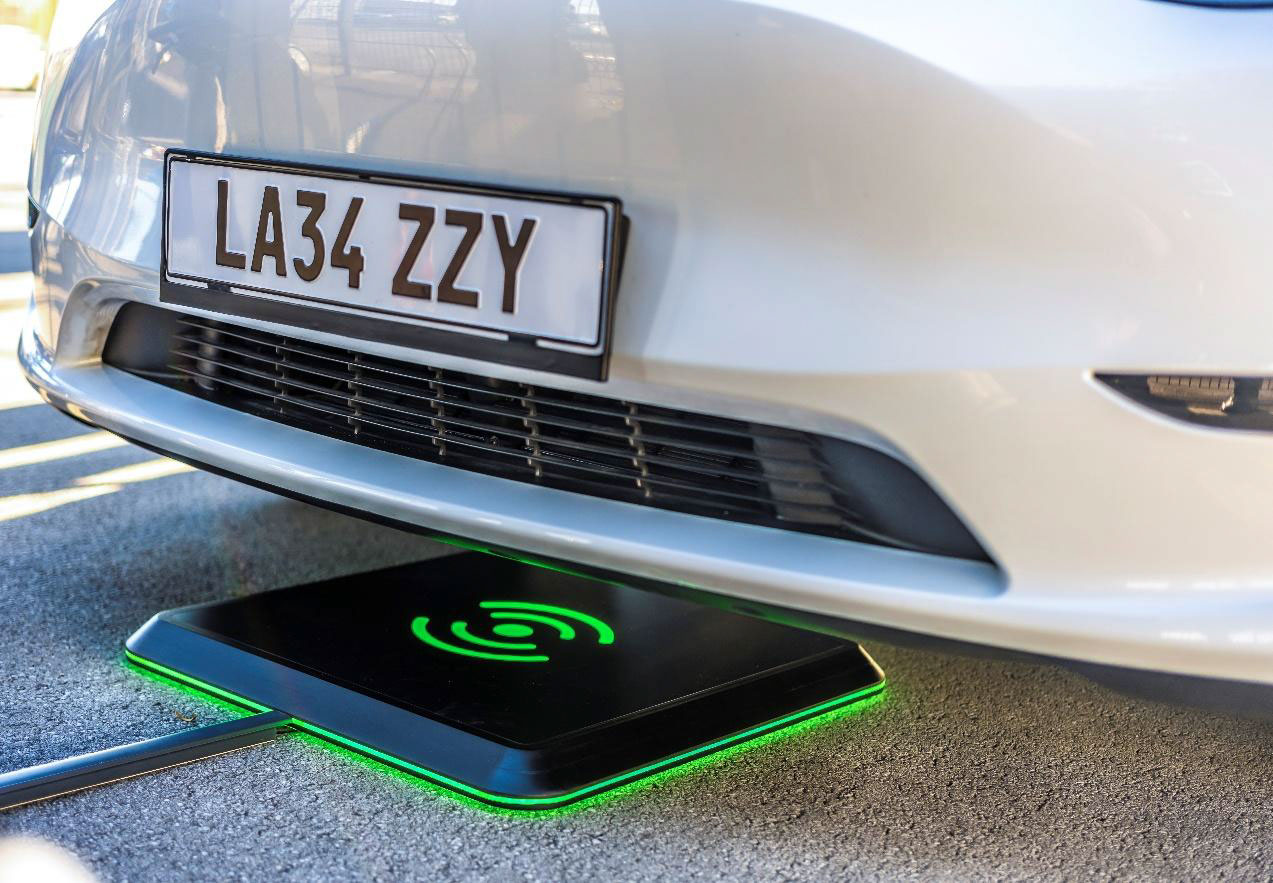
- Picture 1: Inductive charging of a car

Normative specifications
The coil system used for inductive charging of passenger cars is defined, for example, in the SAE standard J2954. The defined coils consist of windings, aluminium shielding plates and an electromagnetically conductive ferrite layer.
In previous approaches, standard ferrite tiles were used for this ferrite layer. Due to its high density, the ferrite layer contributes significantly to the weight of the coil system. It is therefore desirable to reduce the volume and mass of the ferrite layer used.
OptGeoFerrit joint project
We have acquired this knowledge as part of a joint project with the Institute for Electrical Energy Conversion (IEW) at the University of Stuttgart. Based on an evaluation of ferrite masses in power applications, we have created the possibility of investigating complex ferrite structures in a simulation. This enables us to design the ferrite layer precisely and specifically for the application. This allows targeted optimisation of the electromagnetic properties, so that both high efficiency and minimal energy losses can be achieved.
As a developer and manufacturer of soft magnetic ferrite cores, we have dealt extensively with this topic. In order to minimise internal system losses, it is necessary to have in-depth knowledge of the behaviour of ferrite components in these applications.
In the joint project, we first determined the quality and power loss values of our ferrite compounds as a function of magnetic saturation. We then transferred this material-specific data to simulation software. The three-dimensional design of the ferrite cores can be varied in this software, resulting in geometries that take into account the field distributions in the core. This results in ferrite cores that are optimally adapted to the respective transmission system and in which magnetic hotspots are avoided. The ferrite cores are segmented wherever demanding mechanical requirements would cause particular stress on the core.
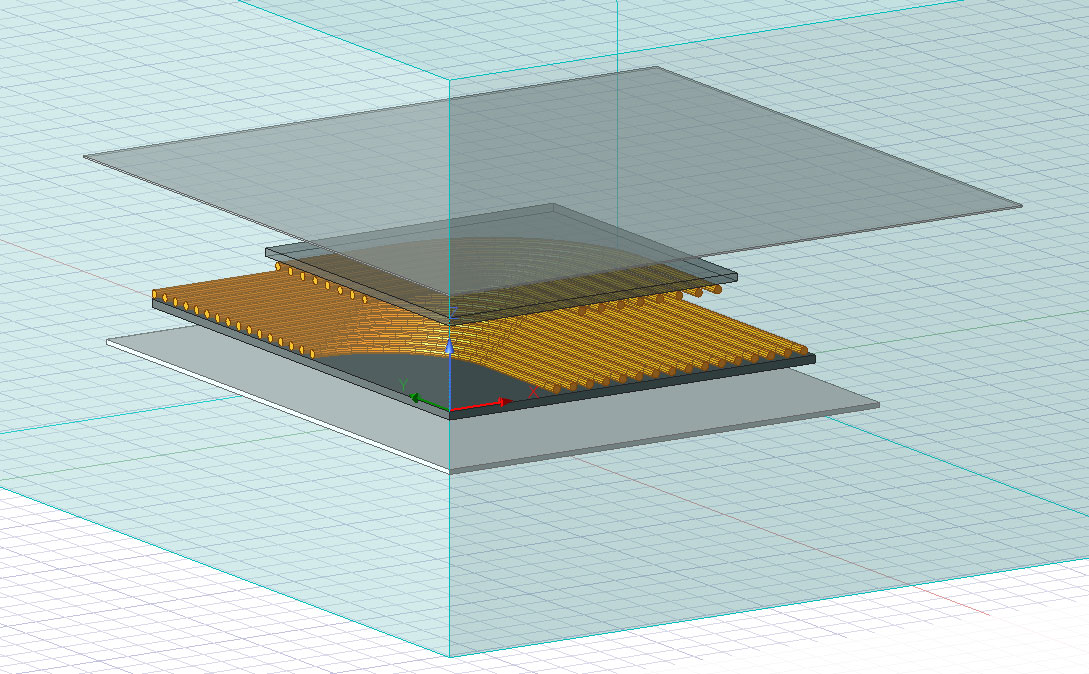
- Picture 2: Simulation model of a charging coil

The result is a coil system that makes optimum use of the available installation space. The material used in the form of ferrite compound and coil wire corresponds exactly to the amount necessary to ensure proper functioning.
As part of the joint project, the ferrite compound used was reduced by around 30% without compromising functionality. The resulting significant weight savings offer a clear advantage, particularly for the receiver antenna integrated into the vehicle, as they have a positive effect on installation space, system efficiency and the overall vehicle weight. The project investigated an AC charging system for passenger cars with a maximum charging power of 22 kW. However, the findings can be transferred to inductive charging systems for other applications and power ranges.
NEOSID – Your partner for custom-fit ferrite cores
Our many years of expertise in the design, simulation and manufacture of ferrite cores enable us to precisely implement highly specialised geometries. Using an injection moulding process, we manufacture ferrite cores exactly to the requirements of the respective customer application. Even wall thicknesses of only 0.2 mm can be reliably achieved. The overall mechanical tolerance of the sintered ferrite components is typically ±2%, which guarantees maximum precision. For optimal adaptation to a wide range of applications, we have a portfolio of over 15 specially developed ferrite materials at our disposal, allowing for tailor-made material selection and maximum performance.
From core to coil
As specialists in wound inductors, we offer our customers not only the development of the right ferrite core, but also the complete manufacture of the associated coil. We develop wound products according to customer-specific requirements and manufacture them on machines specially tailored to our processes. Our technologies enable us to process all common wire types – from the finest enameled wire to thick strands. Production facilities, manufacturing aids and testing technology are developed and manufactured in-house, ensuring maximum precision, flexibility and quality. Our production capacities range from individual prototypes to large series, enabling us to reliably cover both development projects and industrial production volumes.
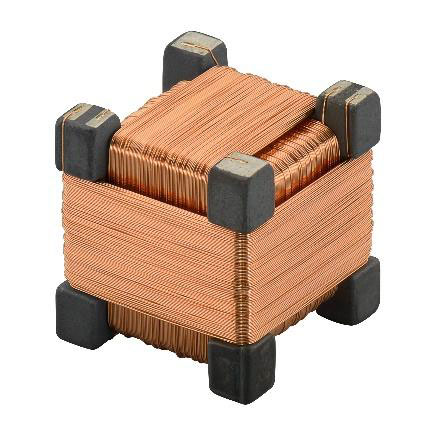
- Picture 3: Product example 1: 3D cube antenna

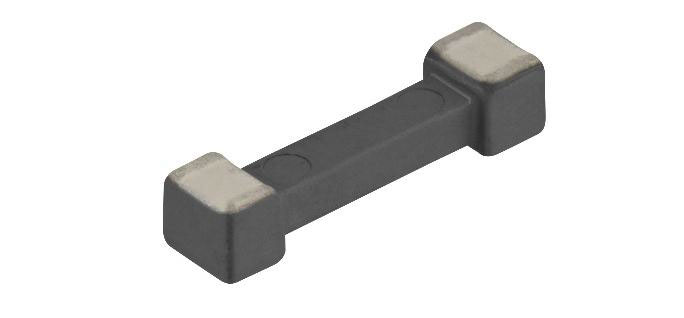
- Picture 4: Product example 2: Ferrite core for an SMD transponder antenna

Areas of application for inductive charging
In addition to inductive charging of electric cars, this technology is suitable for numerous other applications, e.g. e-bikes, e-scooters, drones, medical devices and industrial equipment.
The advantages at a glance:
Convenience and user-friendliness
No need to plug in or unplug cables – simply position and charge.
Ideal for places where charging is frequent, e.g. parking spaces.
Reduces cable clutter and wear on connectors.
Less wear and tear for longer service life
No mechanical contacts → less wear and tear.
Dustproof and waterproof devices possible, as there are no open charging sockets.
Safety
No open electrical contacts – ideal for wet and industrial environments.
Design freedom
Devices can be designed to be completely closed (without connections).
Better sealing against water and dust (e.g. protection class IP68).
Automated charging
Ideal for autonomous vehicles and/or robots.
Low maintenance
No moving parts, low risk of failure.
Tell us your requirements - we will develop the right solution for you!
Have we aroused your interest? Then contact us about the latest generation of planar transformers.
Download
PDF „Inductive charging“